SERVIR

Global Collaborative

Connecting Space to Village

Locally led Globally connected. Decision-ready Earth observation at scale

Earth observation data, analytics, and GeoAI capabilities are expanding at unprecedented speed. SIG-NAL serves as the Global Secretariat for the SERVIR Global Collaborative, a network of leading geospatial institutions in Africa, Asia, and Latin America. The SERVIR Global Collaborative partners with countries and organizations to turn cutting edge geospatial science and information into trusted, operational solutions for strengthened risk management in the contexts of weather, climate, landscapes, water, and food security.

Bridging global innovation

About the Partnership

Satellite data, global models, and AI-driven analytics offer powerful insights into environmental change. Yet translating these advances into tools that work for real users on the ground remains a persistent challenge. Users are overwhelmed by a growing volume of models and analytical platforms, making it difficult for national agencies to determine which tools are reliable, relevant, and worth institutionalizing.


Too often, globally developed products introduce local errors when regional environmental conditions or institutional realities are overlooked. When governments and communities are not meaningfully involved in design, even scientifically robust tools can fail to gain trust, ownership, or sustained use.

SERVIR was created to overcome these barriers.

SERVIR uses a locally led, hub-based approach to ensure Earth observation solutions are designed with users, not simply delivered to them. Independent regional hubs work directly with national institutions to identify priorities, co-develop services, and adapt global data and methods to local environmental and institutional contexts.
This approach has established SERVIR as a trusted provider of operational platforms that support climate resilience, land and water management, agriculture and food security, and disaster preparedness across Africa, Asia, and Latin America.

SERVIR was created to overcome these barriers

SERVIR uses a locally led, hub-based approach to ensure Earth observation solutions are designed with users, not simply delivered to them. Independent regional hubs work directly with national institutions to identify priorities, co-develop services, and adapt global data and methods to local environmental and institutional contexts.
This approach has established SERVIR as a trusted provider of operational platforms that support climate resilience, land and water management, agriculture and food security, and disaster preparedness across Africa, Asia, and Latin America.

SERVIR Regional Hub Institutions

How

How the SERVIR Model Works

Methodology / Process

From user needs to operational platforms supporting tailored services

By combining cutting-edge technology and data with locally-grounded strategies, we generate demand-driven, actionable information for managing risk and natural resources. SERVIR’s delivery model directly addresses the barriers that often prevent global data and tools from being adopted locally:
Technical Assistance & Training

User-led problem identification

Regional hubs work in close partnership with national agencies and local stakeholders to define priorities through needs assessments led by users—not external tool developers. This ensures solutions address real decision-making challenges from the outset.
Cross-Sector Environmental Data Solutions

Co-designed, locally tailored solution development

Regional hubs work with SERVIR’s global academic, public, and private-sector partners to integrate cutting-edge science and GeoAI methods into operational workflows tailored to local environmental conditions, institutional capacities, user needs, and policy frameworks—ensuring scientific rigor while avoiding one-size-fits-all approaches.
Iterative deployment

Iterative deployment and learning

Solutions are deployed through cycles of testing, monitoring, evaluation, and learning, allowing tools to be refined based on real-world performance, continuous user feedback, and local knowledge.

Expertise

At the center of the SERVIR model is sustained engagement with governments, regional and local institutions, and community partners. Users participate throughout development and delivery—ensuring tools are understood, trusted, and embedded within national systems rather than remaining as standalone projects. This long-term engagement has enabled SERVIR hubs to maintain durable institutional relationships and provide trusted operational platforms and trainings that enable timely, informed decisions across thematic areas, including:
Network coordination
Flood and extreme weather early warning systems
Land, forest, and ecosystem monitoring

Land, forest, and ecosystem monitoring

Agriculture and food security decision support
Wildfire risk assessment and response
Climate resilience planning and adaptation

Climate resilience planning and adaptation

As the Global Secretariat, SIG-NAL enables the SERVIR network to function as a coherent, trusted, and effective global collaborative. SIG-NAL supports centralized, shared digital infrastructure and GeoAI enablement; hub to hub knowledge sharing; network governance; strategic partnerships and sustainability planning; and network-wide impact monitoring and evaluation.

SIG-NAL ensures that locally led innovation can scale globally—without losing relevance, credibility, or impact.

Projects

SERVIR Global Collaborative in Practice

Forecasting extremes, protecting communities

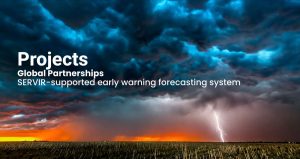
HIWAT

The High-Impact Weather Assessment Toolkit (HIWAT) is a SERVIR-supported early warning forecasting system for extreme weather developed by the SERVIR hub in South Asia

Read More »
GEOGLOWS

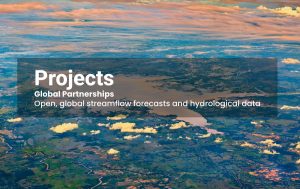
GEOGLOWS

GEOGLOWS is an international initiative that provides open, global streamflow forecasts and hydrological data to manage water resources

Read More »